
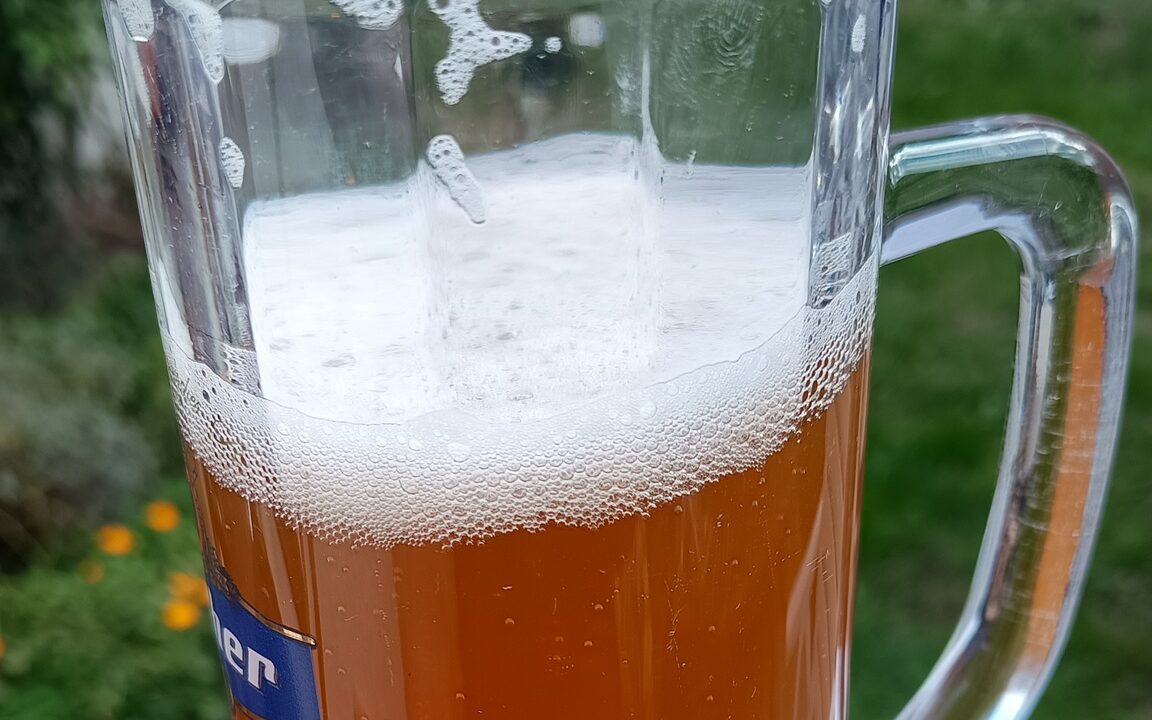
Beer according to the Reinheitsgebot is not allowed to use other forms of sugar in your bottles for carbonation. Spiese is the answer I found to be easiest on the Homebrewing scale.
The popular homebrewing tactic of using a scoop of sugar, honey, or corn sugar to carbonate your beer in the bottles is therefore not allowed if you want to do things the traditional way. And I tend to prefer more traditional ways and ingredients.
So let me take you take the steps to do this easily on a homebrewing scale, that I figured out through a lot of trial and error. Which comes with the added benefit of using some of your own wort, so that you don’t have to grab Dried or Liquid malt extract. Or have to hunt around for sugar.
Three ways to Carbonate
There are three ways (that I know off) to get beer into a bottle and carbonated. Which are:
- To referment in the bottle using a source of sugar and the yeast in suspension (or adding fresh yeast).
- To get the beer into the bottles when still undergoing primary fermentation. “Grünschlauchen”
- To transfer the beer under pressure into the bottles.
Method number 3 is not something I or other homebrewers that are starting out will have the equipment for, and is therefore not really an option for most.
Number 2 is a method that a lot of brewers use, but is quite difficult to do when you have a job and obligations outside of brewing beer I found. And requires you to measure multiple times a day during fermentation, or to use a fancy drop in hydrometer. You also need to know for certain where your Final Gravity (FG) is going to land. All factors that make this method not the easiest to do.
Way number 1 is easiest and safest to do on the homebrewing scale, but, if you use sugar or alternatives, is not according to the Reinheitsgebot anymore. So after a lot of searching and figuring out, the Speise method is very easy to do. And I have had great success with over many batches with. Giving a tighter bubble and head, and improving flavor. (All anecdotal, feel free to have your own opinions).
Speise method on the Homebrewing scale
In its most basic form there are 3 steps to using Speise to referment in the bottle.
Step 1. On brew day, have your cooled down Wort, and reserve a portion of it before you add your yeast. For my current batch size ~7 liters, I reserve ~400 ml. Throw that in the Freezer until bottling day.
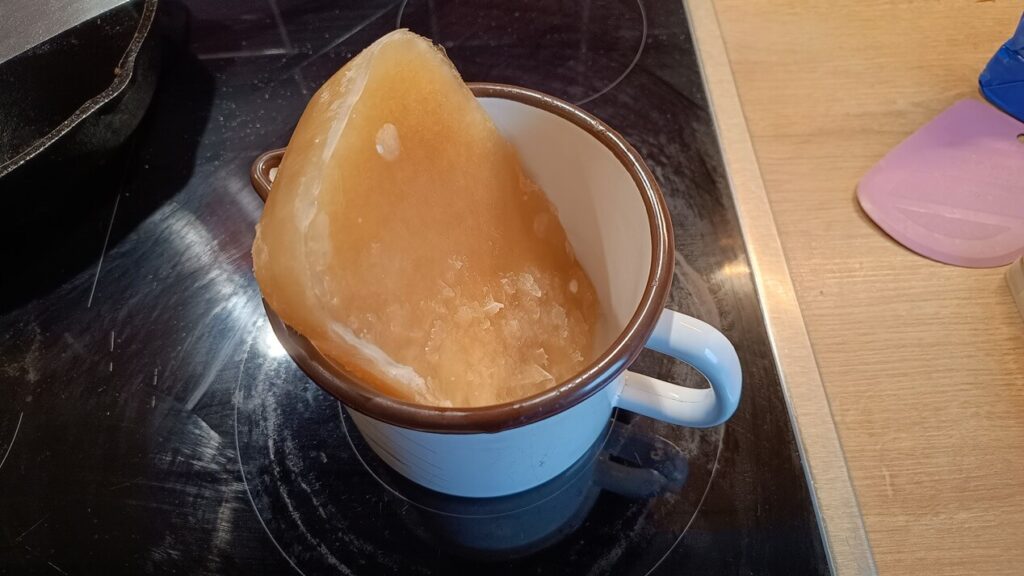
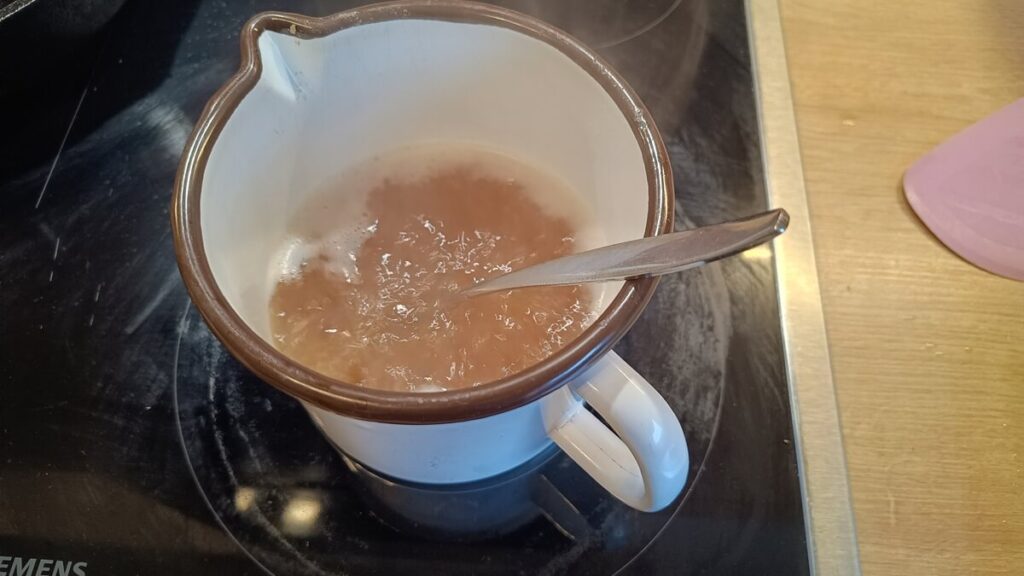
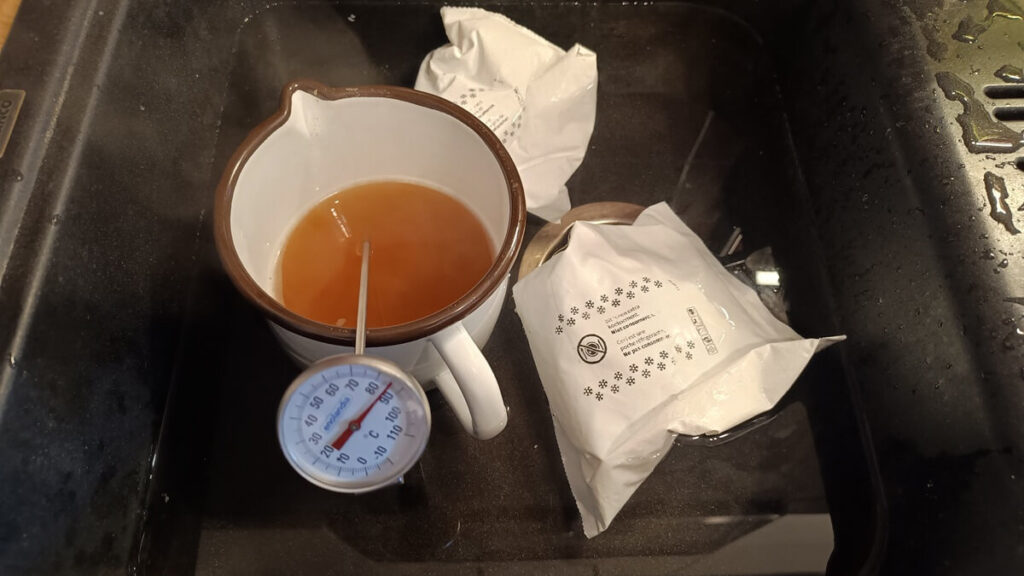
Step 2. On bottling day, grab container out of the Freezer, defrost in a pan and boil for 5 minutes. Rapidly cool down to around ~25 degrees Celsius. Easy to do in the sink with some ice.
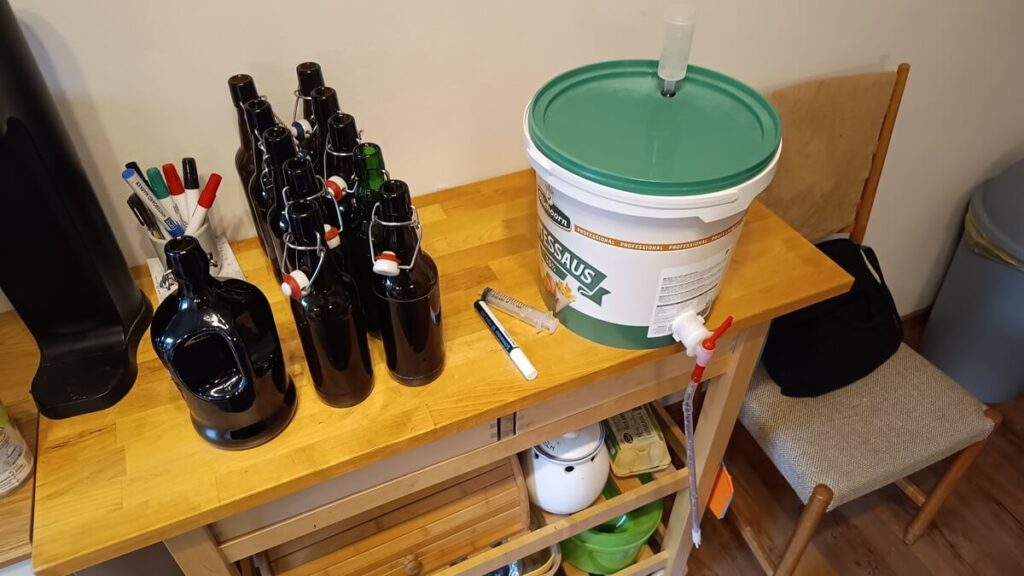
Step 3. Using a measuring (medical) syringe, squirt your needed amount of ml into each bottle before filling as usual. Do that first before filling the bottles with the green beer, to have the correct amount of headspace.
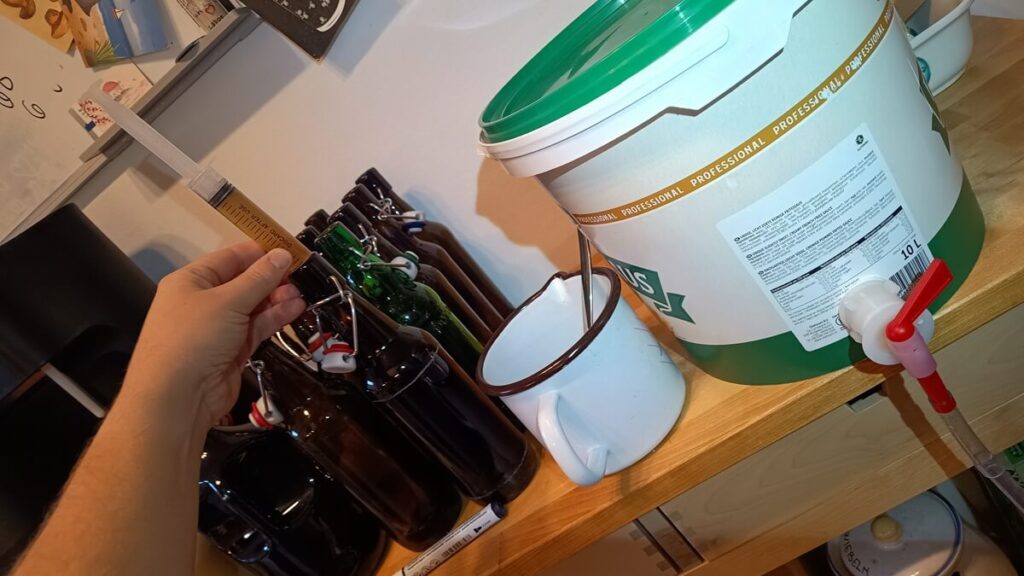
And that’s it, wait 2 weeks as usual when bottle conditioning, and enjoy your homebrew brewed according exactly the Reinheitsgebot.
For an estimate of the amount of Speise needed per bottle, take a look at the below table.
| Starting Gravity on Wort | Grams of sugar a liter of Wort | ml needed per 0.5 l bottle |
| 1.040 (Lighter beer) | ≈105 g/L | ≈35 ml per bottle |
| 1.050 (standard Keller/Weizen) | ≈130 g/L | ≈28 ml per bottle |
| 1.060 (Heavier beer / bock) | ≈155 g/L | ≈24 ml per bottle |
I have however switched to carbonating a little less, and just using 20 ml per half liter. And even considering lowering that further as I am writing this. As it gives me the amount of carbonation I really like in most of my beer that I like to brew. Which are Kellerbeers in the Franconian style.
I recommend experimenting in the same batch with different amounts of ml and marking the bottles. And finding the sweet spot that you like the most.
But, as always, be careful that you do not over carbonate for your bottles.
As a guideline, take a look at the Speise Calculator. And use that to get the data you need.
Use at your own risk, any bottle bombs are your own doing : – )
